


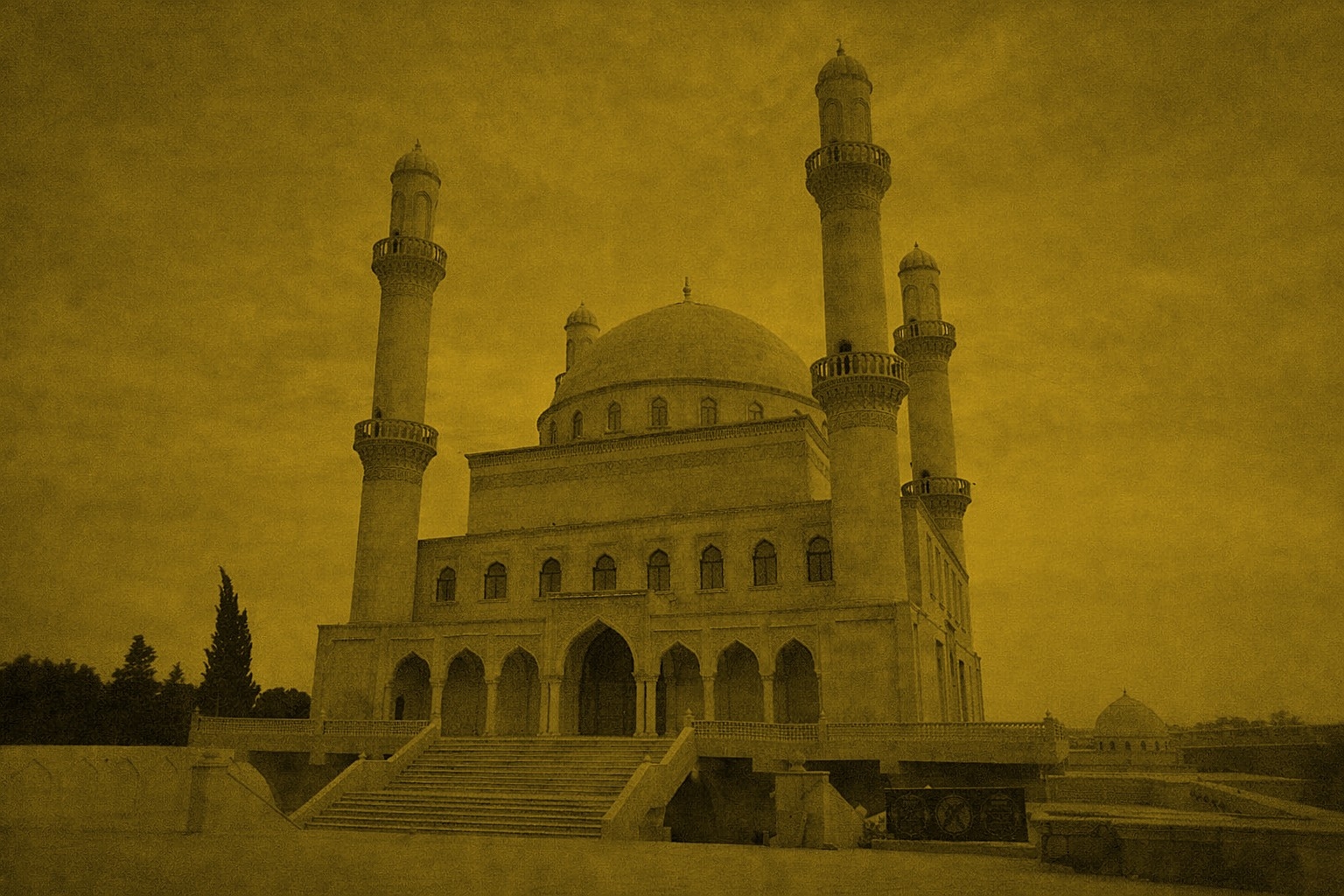
Located in the ancient village of Nardaran near Baku, this shrine is believed to be the burial place of Rahima Khatun, the daughter of Imam Musa al-Kazim (peace be upon him). An inscription above the entrance of the mosque building housing the grave indicates that the structure was erected in 1363–1364 CE. Nearby, there are other historical structures, including another mosque built in 1307–1308, a mosque dating back to the 17th century, and a caravanserai. A cemetery is also located near the shrine complex, and the tombstones of some graves reflect the antiquity of the site.
There is no information about the Nardaran shrine in classical sources. The buildings within the complex remained buried underground and forgotten for a long time until they were restored in the early 20th century through the efforts of local residents. During the Soviet period, the shrine was used for non-religious purposes. After Azerbaijan regained its independence, the Nardaran shrine was reconstructed into a major religious complex featuring a large dome and four tall minarets. The sacred grave is located in a small chamber accessible from inside the mosque.
Sources
I.P. Shcheblykin, Monuments of Azerbaijani Architecture of the Nizami Era (materials), pp. 30–31
M.X. Nemat, Sacred Shrines in Azerbaijan, pp. 57–60
Encyclopedia of Mosques of the Republic of Azerbaijan, p. 82
Azerbaijan: The Pearl of Islamic Culture, pp. 1408–109